
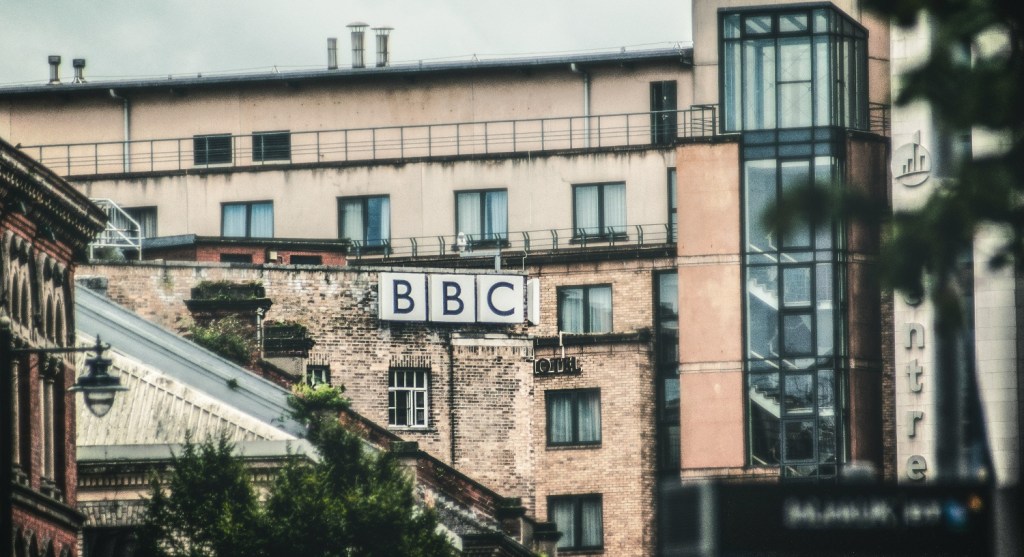
A shift to plant-based eating will be part of the BBC’s transition to Net Zero, a new Climate Transition Plan states.
The public service broadcaster has published a 74-page report, which sets out how it intends to be Net Zero by 2050.
Alongside energy and travel, the report includes food as one of “three areas of focus to drive change” within the TV/Film and Music industries.
Specifically, it notes the importance of “how as an industry we can prioritise plant-based menus for content and production teams to reduce our catering emissions and impact.”
The commitment to reducing food emissions is part of the BBC’s plans for “ambitious and tangible actions off-screen” to complement on-screen educational content.
Plant-based menus lower climate impact
Switching meat and dairy to plant-based meals would drastically lower the BBC’s greenhouse gas emissions.
Landmark BBC programmes such as David Attenborough’s Planet Earth III have previously promoted a plant-based food system. The revered presenter explained that plant-based diets are “so much more efficient” than those that include meat or dairy.

This is partly because of the land use required to produce meat and dairy products. Studies have revealed how a plant-based food system could free up an area equal to the combined size of China, the US, the European Union and Australia.
As a broadcaster committed to “act in the public interest,” the BBC has a responsibility to “take our duty to the environment and respect for the planet seriously,” writes Alan Dickson, the BBC’s Chief Financial Officer, in the report’s Foreword.
It is currently unclear exactly what steps the BBC will take to implement the prioritisation of plant-based meals.
Institutional change for Net Zero success
The three key areas for climate action within the TV/Film and Music industries were set out at a “high-level industry summit” in Liverpool in November 2024.
With some 22,000 employees, plus many thousands more contractors, institutional change towards a plant-based policy at the BBC would have a considerable impact on the planet. The move would also be significant in setting an example of climate leadership.
Such institutional change is already underway. It was recently reported that green energy company Ecotricity had opened the UK’s first fully plant-based workplace canteen.
Meanwhile, universities across the UK, including Warwick and Stirling, have voted to implement fully plant-based menus in response to the climate and biodiversity crises.
Local councils, including Nottingham City Council and Oxfordshire County Council, have passed similar policies. ★
[Main image credit: K. Mitch Hodge]


 veganpoetry.com
Leave a comment