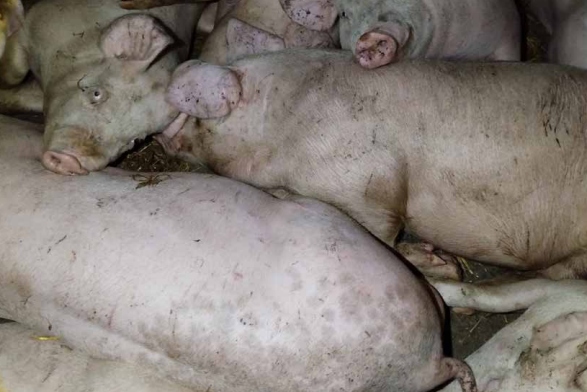
Farmers create many problems by cramming vast numbers of pigs into small spaces. One is that the stressed, diseased prisoners sometimes bite each other’s tails.
Tail biting can lead to infections and death. The industry’s “solution” to tail biting is tail docking. This means cutting off a pig’s tail before it can be bitten off.
Unfortunately, the practice causes extreme suffering to pigs, not least because farmers dock pigs’ tails without administering anaesthetic.
Tail docking is supposed to be a last resort in the UK. Section 124 of Defra’s Code of Practice for the Welfare of Pigs states that the practice should only be used “after improvements to the pigs’ environment and management have proved ineffectual in preventing tail biting.”
In other words, farmers have a responsibility to improve the conditions of farmed animals before they resort to tail docking.
Like so many animal welfare regulations, however, there is a significant enforcement gap between what is written in law and what really happens.
Animal welfare’s enforcement problem
Investigations by Animal Equality and Animal Law Foundation have shown that routine tail docking is carried out on over 70% of UK pig farms.
Seven in 10 pig farms use a practice that should be a “last resort” on a routine basis.
This is a serious problem for the protection of animals on UK farms.
As undercover investigations by Animal Rising confirmed earlier this year, the promise of high-welfare standards is deceiving consumers about the conditions of animals raised for meat, eggs and dairy.
Despite falling well short of the industry’s own welfare standards, accountability for unacceptable practices is sorely lacking. Indeed, in 2022 and 2023, prosecutions were commenced in fewer than 1% of cases involving complaints and non-compliance found during inspections.
Storytelling to close the enforcement gap?
Animal suffering that takes place on farms and in slaughterhouses has become uniquely visible in the social media age.
Footage obtained by animal protection organisations abounds online. Animal abuse on farms has been shared in mainstream news outlets and in popular documentaries. In 2023, activist Joey Carbstrong broke new ground by filming inside a UK pig abattoir. Slaughterhouses have glass walls and then some.
Having conducted investigations and produced reports that lay bare the extent of the problem, the Animal Law Foundation has now launched a new campaign about tail docking.
‘A Pig’s Tail’ replaces statistics with stories and pictures with personal narrative.
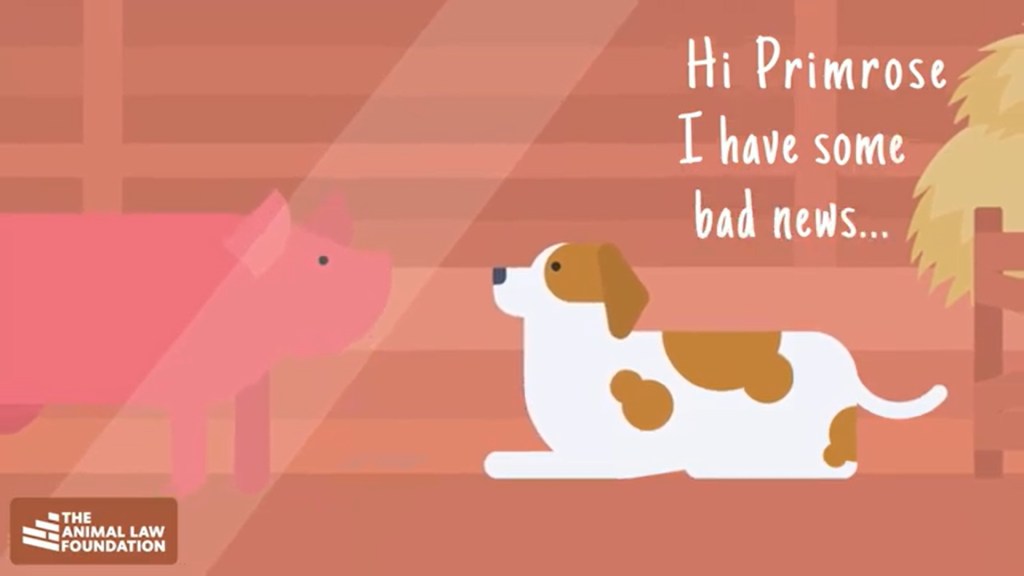
This is the story of Primrose, a little pig who loves her tail. Faced with the threat of losing her beloved tail, she discovers the harsh reality of illegal tail docking.
Read the fictional accounts (based on true events in the pig industry) of Primrose and Penny here.
Why fiction can make it more real
The reality of animal agriculture has been well documented for decades. Yet, animal welfare failings remain routine.
A fictional lens offers a different route to hearts and minds. Storytelling methods that trigger an emotional and imaginative response can have a more profound effect on behavioural change than purely statistical approaches.
Representations in art and literature help inform wider societal attitudes towards animals. As Animal Law Foundation’s new campaign shows, creative ways to communicate the realities of animal farming have a significant place in advocacy efforts. ★
 veganpoetry.com
Leave a comment