
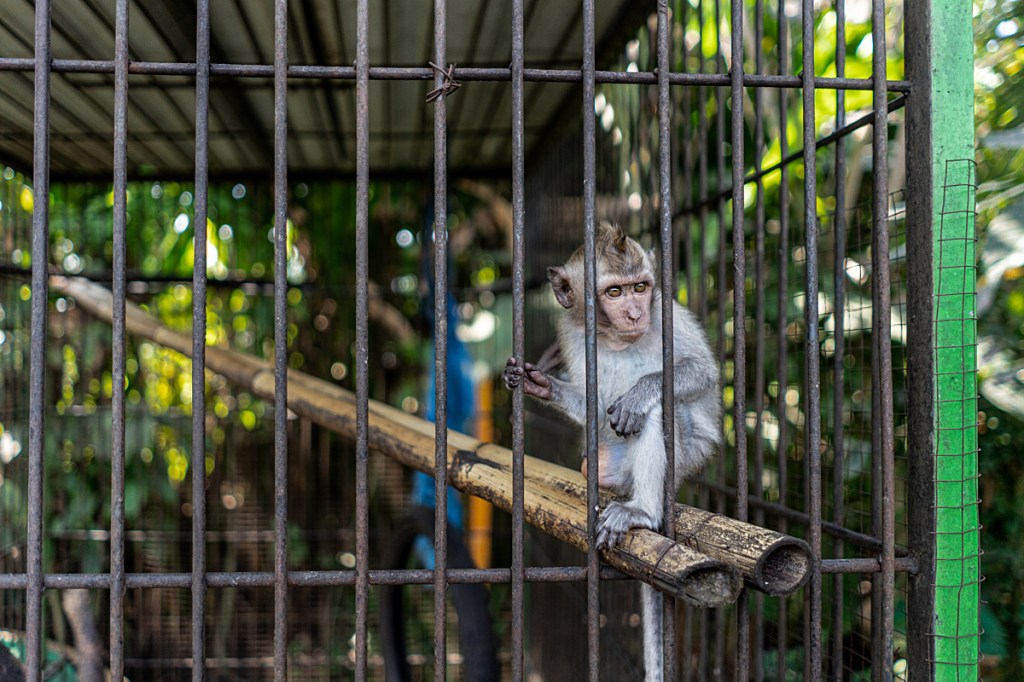
One in three Brits has been to a tourist attraction where animals have been mistreated, according to a survey published last year by animal welfare charity Animals Asia.
The research paints a stark picture of the routine abuse of animals around the world. Media reporting of the study also offers learnings about how to frame animal cruelty.
Cruel entertainment
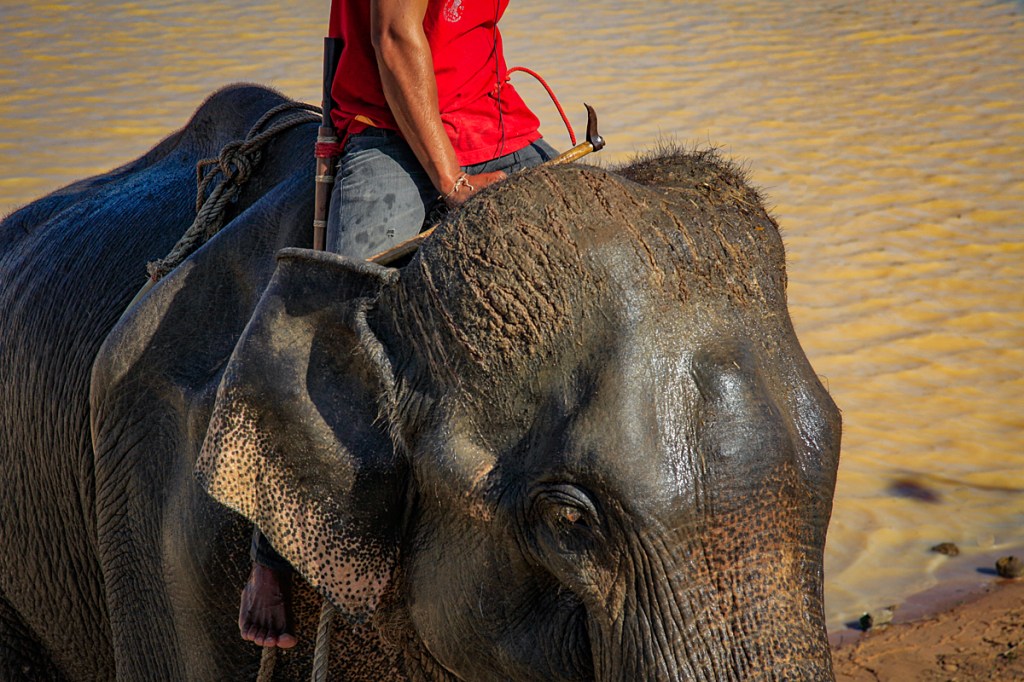
From elephants used for rides to monkeys kept on chains, the tourist industry includes abundant examples of routine animal abuse.
After compiling the evidence, Animals Asia delivered its findings to the government. It is calling for a new Animals (Low Welfare Activities Abroad) Act to include a list of banned activities.
The survey provides strong evidence of a need for change from a human-centric standpoint. Of those who witnessed animal cruelty on holiday, more than half felt feelings of guilt. Three in 10 reported wanting to do something to stop it. Some 9% went as far as to say the experience ruined their holiday.
Who are the real victims of animal abuse?
The Daily Mirror recently reported on the research. For animal advocates, it is always encouraging to see animal cruelty being condemned in the press. With anti-vegan falsehoods increasingly frequent in the media, finding common ground with the status quo narrative is a welcome change.
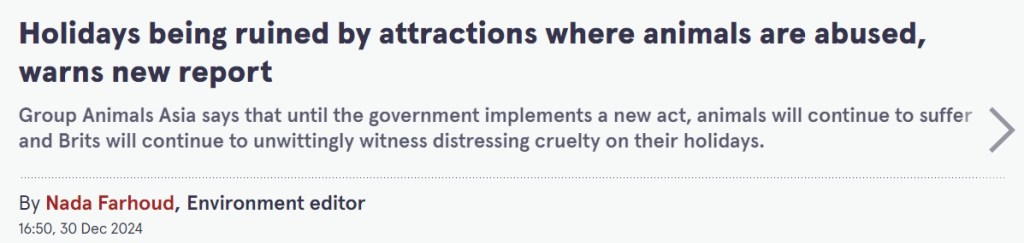
The Mirror led with the headline: ‘Holidays being ruined by attractions where animals are abused, warns new report’. This angle is not surprising. Human readers of human newspapers are predominantly concerned with the human aspect of any story.
I think my initial reaction (“who is the real victim here?”) is something that many animal advocates would instinctively feel. Eliciting sympathy for the poor holidaymakers forced to endure the sight of others’ cruelty seems to epitomise human supremacy. Like a Conservative councillor calling for homeless people to be moved off the streets for a Royal event, it has the hallmarks of prioritising the viewer’s delicacies over the victims’ suffering.
The framing seems speciesist and classist. It probably is. But that doesn’t mean it can’t be harnessed to bring about positive change for animals.
The self-interested case for animal rights
In a recent opinion article for Environmental Rights Review, I argued that rolling out more rights to animals can happen faster and less contentiously when motivated by self-interested reasons.
From food to entertainment, the rational human self-interest to avoid animal cruelty is overwhelming in so many cases. This is true even where short-term “gains” seem to conflict with animal interests. For example, although an individual might have a narrow self-interest to enjoy a burger made of cow in the present, the disastrous environmental impacts of beef consumption should push society to promote plant-based and cultivated meat alternatives.
Just as environmental rights protect all of humanity, not just the ‘eco-zealots’ advocating for them, the advent of animal rights would also bring immeasurable benefits to all humans
If the displeasure and guilt of holidaymakers exposed to the use of animals for entertainment helps to end the cruelty, that can only be a good thing.
Balancing interests
Of course, powerful interest groups distort this picture. Where the obvious long-term self-interest to limit destructive activities clashes with corporations’ desire to protect profits, industry interests still prevail.
There is a danger too that over-emphasis on human self-interest as a motivating factor in the pursuit of animal rights could become counter-productive. Environmentalists often argue for reducing rather than eliminating meat, fish, dairy and eggs from our diets. An overly utilitarian approach could, for example, conclude that the combined (human) pleasure of spectators at horse racing meets outweighs the harms inflicted on the horses.
While human interest reigns supreme, unseen cruelty is likely to continue. Seeing a monkey kept on chains is a flagrant example of animal abuse. Many tourists outraged by such a sight will probably add a splash of milk to their coffee or tuck into eggs at the breakfast buffet. Some might save some sympathy for the forcibly impregnated cows or day-old male chicks ground up because of their sex. Most probably won’t.
There’s no excuse for animal abuse
Efforts to incorporate animals into political, legal and social systems require non-human animals to be respected as individuals in their own right. This is a long journey that has begun through legislative battles to grant personhood or other rights to individual animals or species.
In the short term, human self-interest can be a strong motivator for reducing or removing some of the most egregious forms of cruelty to animals. Even if the motivations remain twisted, it is encouraging that so many tourists want to tune out of animal abuse. ★
Cover photo: Macaque on display in a cage at Intan Sari Luwak, Bali, Indonesia. Credit: Thomas Machowicz / We Animals.


 veganpoetry.com
Leave a comment