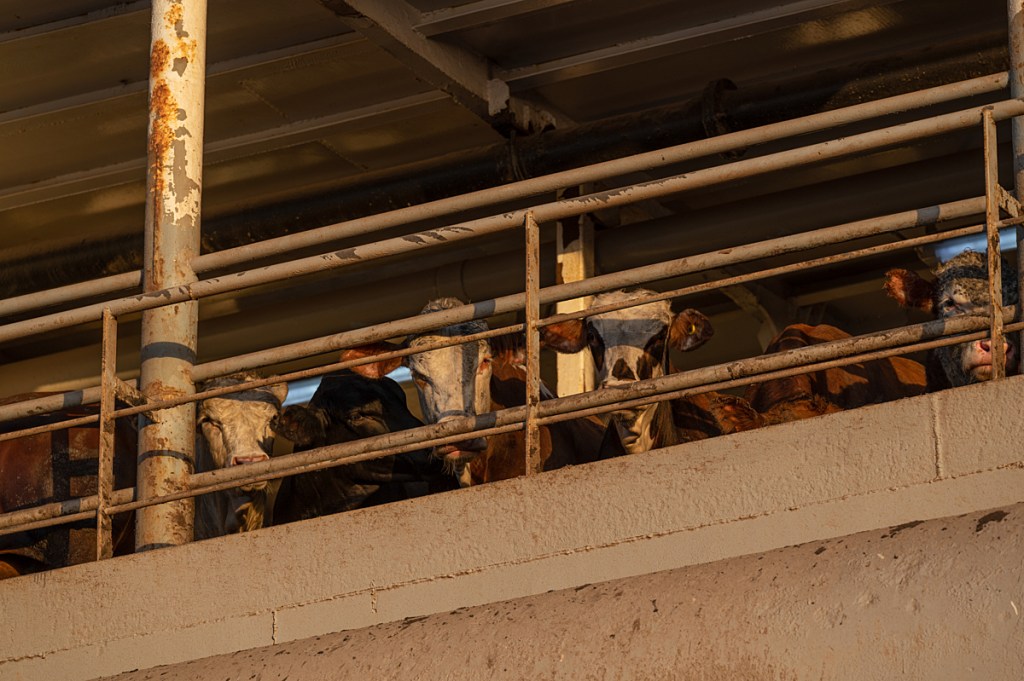
The UK’s long-awaited ban on exporting live animals for slaughter is official.
On Monday 20 May 2024, the Animal Welfare (Livestock Exports) Act became law after receiving Royal Assent.
Many farmed animals can now no longer be exported abroad for fattening or slaughter.
While the move is a major step forward for animal welfare, severe loopholes limit the impact of the legislation.
The act covers only five species: cows, sheep, goats, pigs and horses. This means that chickens and other captive birds will continue to be exported.
Moreover, exports for breeding or competitions are not covered by the new legislation. Northern Ireland is also exempted.
The government described the ban as a reminder that the UK is “a world leader in animal welfare standards.”
The UK has followed in the footsteps of New Zealand and Brazil in banning live exports.
Politicians certainly never miss a chance to present the UK as a “nation of animal lovers”. In 1822, the country passed the first law protecting animals of the modern era.
Yet, these limited welfare measures fall well short of meaningful protection. Investigations into supposedly “high-welfare” farms have found that horrific abuses are the rule not the exception.
Live exports hit the headlines earlier this year after a live export ship transporting 16,000 sheep and cows from Australia to Israel was stranded at sea for more than three months.
Separately, a live export ship docked in Cape Town harbour caused a furore after residents complained of a “debilitating stench”.
Ending live animal exports can only be a good thing. But it is a small ripple of mercy in a vast pool of suffering.
Feature photo credit: Stefano Belacchi / We Animals Media

 veganpoetry.com
Leave a comment