
Are you welfarist or abolitionist? It is the archetypal debate among animal rights thinkers and one that has long since reached an impasse.
A new paper from Stijn Bruers re-opens the debate and offers fresh evidence for the potential harms of welfarism. (An earlier version of the paper can be read for free here.)
Better welfare is an absorbing state
Using a survey-based approach with hypothetical situations, Bruers found that improved welfare meat was not a stepping stone to eliminating meat consumption, as some welfarists claim.
Rather, higher welfare meat can become an “absorbing state, which prevents a further transition to animal-free meat substitutes,” he writes.
Welfarism as obstacle
This “absorbing state” is one of abolitionism’s most convincing arguments.
By celebrating bigger cages, welfarists participate in the same deceptive marketing as meat companies, easing consumers’ conscience such that they can continue needlessly using and abusing sentient beings.
As investigations into RSPCA-approved farms have repeatedly shown, the idea that “higher-welfare” meat is ethical is a scam.
Incremental gains
More convincing on the welfarist side is the argument that we cannot abandon the animals living in the here and now in pursuit of an ideological goal.
Any incremental welfare improvement for a pig in a farrowing crate will reduce her suffering, albeit marginally. This is surely a good thing.
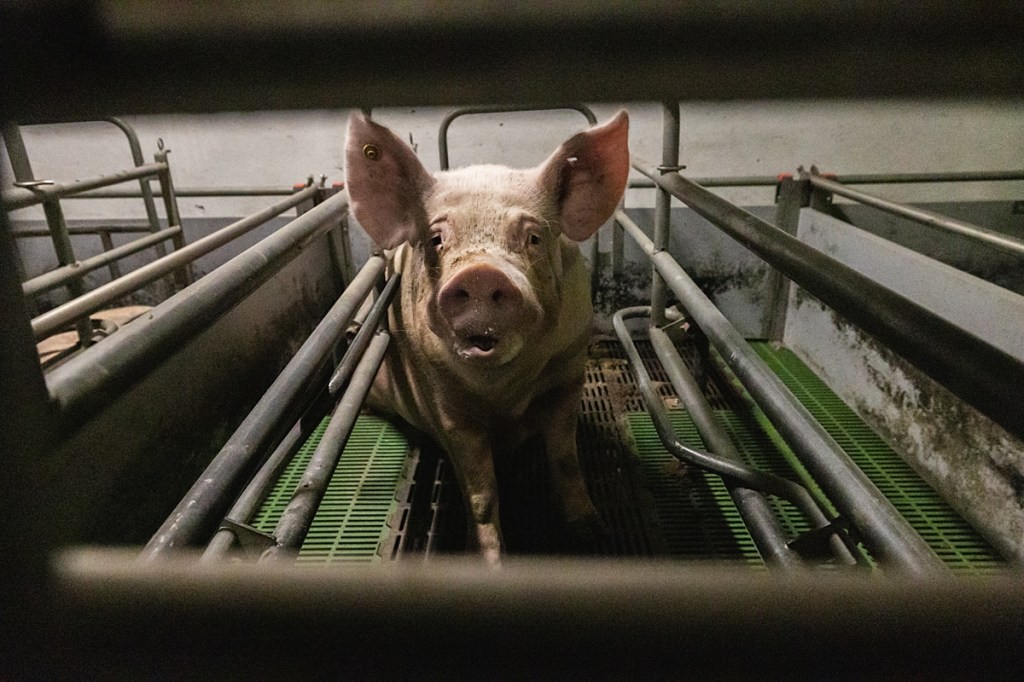
Fighting for a future free from animal abuse, however, does not mean ignoring the suffering of animals in factory farms right now.
As Bruers points out, abolitionists can be incrementalists: setting a goal of reducing to zero is abolitionist.
Conversely, welfarists need not work in increments. Instead, they can aim for swift, radical improvements such as ending factory farming (which, given the impossibility of feeding the world with “ethical” smallholder farms, would necessitate a drastic reduction in meat consumption).
A route through the impasse?
Welfarism versus abolitionism may be at a standstill but animal abuse does not stop.
Billions of sentient beings are suffering right now on farms, in slaughterhouses, in laboratories, in zoos, in circuses, on racecourses and elsewhere. And they will continue to suffer until humans re-think our relationship with non-humans animals.
The ‘stepping stone model’, Bruers warns, ‘could result in a locked-in equilibrium with a less harmful social norm’.
This is the crux of the debate. On the one hand, less harmful is good. On the other hand, no harm would be better.
If small improvements are an obstacle to further improvements, then better welfare cannot help end animal abuse.

 veganpoetry.com
Leave a comment