First published by Cambridge Centre for Animal Rights Law
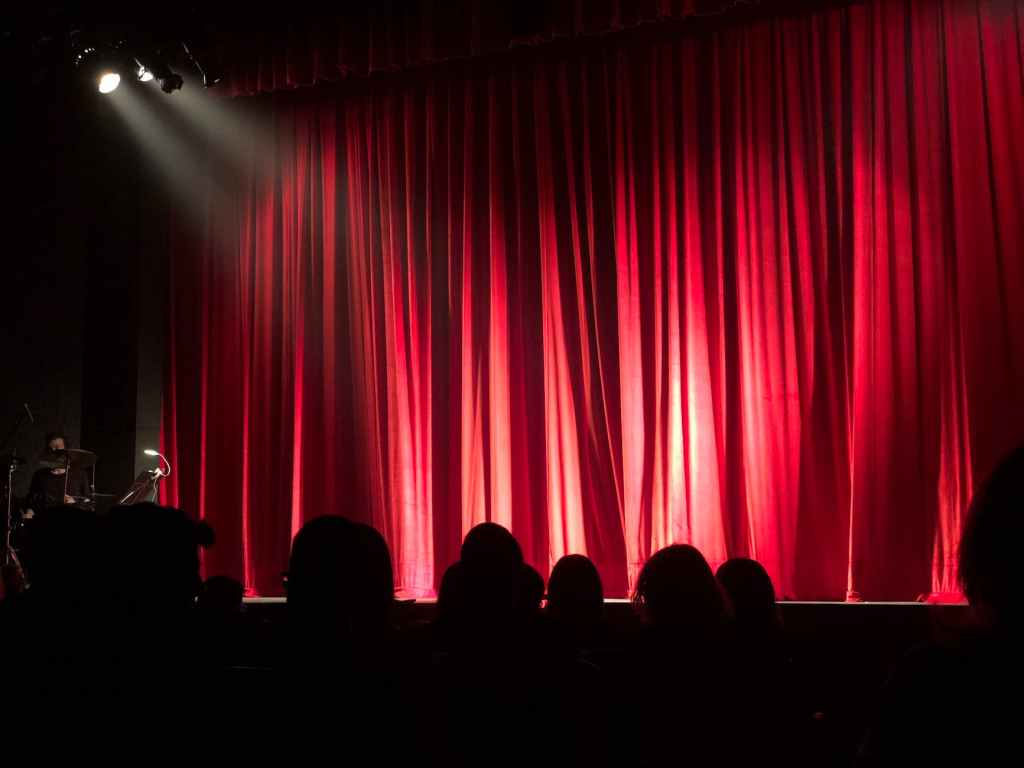
Roll up, roll up, The Marvellous Matadero will be onstage in fifteen minutes. Who am I? I am his unofficial warm-up act, a presence where before there was emptiness, a mysterious embodiment of the invisible backstage, a megaphone for the unheard howls, a brief invitation to think about more than vanishing bird cages and rabbits pulled out of hats. So, top up your popcorn and readjust your varifocals, as we await the arrival of a man so elusive he makes Banksy look banal. For the first time in the public eye, The Marvellous Matadero will perform his tricks for your viewing pleasure. The greatest illusion of our time is about to be unmasked: don’t blink.
Introduction
Seriously though, since I have your attention, allow me first to say a few words on my chosen theme tonight: difference. You might look at me and say, he’s a bit different to our usual pre-show timestaller, and you’d be right of course; I’m not a C-list celebrity trying to increase my profile; I’m not here to sell you dreams or wristbands or poppers. I’m here to tell you a story.
You, Sir, with the hot dog and hunched shoulders, you think you’re special, don’t you? Of course you do! What about you Madam? Yes, you with the flask of tea, nibbling on a chocolate biscuit. Are you morally superior to a sloth?
What’s morality? Ah, well, we’re going to need to define some words it seems. Morality is… morality is… well, would you walk over there, Madam, and punch that man on the nose? You would! Ah, OK, very well. Is it just that particular man you would like to punch? Or anyone here? Only the men! Fair enough, Madam, I can’t argue with that. And you’ve helped define morality: it just means deciding what is right and what is wrong. You have made a moral choice, Madam, about who is worthy of being punched. We all make moral choices every minute of every day, whether we know it or not.
What other moral choices have you made today? You decided not to crash your car on the drive to the theatre tonight, which saved the lives of your husband and kids. What’s that? You came on the train? Even better! You chose a more sustainable mode of transport, a moral decision to limit your personal carbon footprint, which could save billions of people from being displaced from their homes in the climate crisis. Ah, but you are wearing leather boots, I can’t help but notice. Does your moral framework not include cows?
Part One: Biology and bias
I know, Madam, I know, cows aren’t the same as humans. Cows aren’t the same as chimpanzees either. Nor are they camels, crocodiles, canaries, crabs, cockroaches, cod or cats. Difference, Madam! I already told you that difference is my theme tonight.
How many species are there in the animal kingdom? Nine or ten million. That’s a lot of difference. Madam, did you know that Richard Ryder once wrote, ‘Since Darwin, scientists have agreed that there is no ‘magical’ essential difference between human and other animals, biologically-speaking. Why then do we make an almost total distinction morally?’
You didn’t? Well, now you do! Richard Ryder coined the term speciesism to describe ‘a prejudice or attitude of bias in favour of the interests of members of one’s own species and against those of members of other species’. Darwin’s work on evolution highlights similarity across species: common ancestors, competition for resources, natural selection. Intra-species difference is good news; it increases the gene pool…
You don’t believe in evolution, Madam? You’re not the only one. Only half of Brits believe in Charles Darwin’s theory, even though the scientific consensus overwhelmingly backs it up. Public opinion and scientific fact are not always one and the same, my friends. Genetically, humans are not a quasi-divine super-species; we are animals like all the others.
The greatest illusion of our time is about to be unmasked: don’t blink.
Biology, bodies and basic animal needs. Tick. But what about morality? Yes, Sir, we are different to other animals. Like cows and canaries. But what do you think makes humans different morally?
Slow down, not all at once! I heard language over this side. Rationality at the back. Use of tools? Consciousness. OK, one by one. You said intellect, Madam. You think you’re smarter than a swallow? Good with directions, are you?
Thomas Aquinas would back you up. He thought animals acted purely out of instinct, where humans engaged in rational thought. I think the African grey parrot would disagree with you, though. As The Cambridge Declaration on Consciousness (2012) puts it, ‘the weight of evidence indicates that humans are not unique in possessing the neurological substrates that generate consciousness’. Different but the same.
More to the point, why should intellect, measured on a human scale, be a basis on which to decide who has rights? Smells like a stitch-up.
OK, what’s next. The human language. Or, rather, human languages since we have more than 7,000 currently in use. We do have a serious obsession with words, with naming things, making things sound more complicated than they need to be. Did you know that, by some estimates, there are a million words in the English language? How many words do you know, Sir? How many do you use every day?
If you are Joe Bloggs, the answers are 40,000 and 20,000 respectively. No, Sir, I know that’s not your name, the point is… sorry, Sir, I didn’t mean to offend. I’m not saying that you are a bang-average, middle-of-the-road, middle-aged man. I’m sure there’s more to you than that. You are an individual after all. With an identity protected by law.
Part Two: N = P
What is the basis of your individuality? Your name, right? What is your name, Sir? Leonard? OK, let me ask you, Leonard: why do you have more rights than a leopard? Because you’re a person, right? OK, but why should a person have more rights than a cat? Because rights are dished out by humans, sure? It makes sense, doesn’t it? I bet when you’re serving the shepherd’s pie, you give yourself the biggest portion, am I right, Leonard?
OK, humans are predisposed to favour other humans. What do we think, everyone: a train is hurtling down the tracks and Leonard is chained up about to be squished to smithereens. You can pull a lever and divert the locomotive to a separate section of track where a leopard has been tied up. Who’s pulling the lever?
You, Madam. Leonard thanks you. Raise your hand if you would pull the lever. OK, most people it seems. And who wouldn’t? Leonard, I think your wife is the only one leaving you to die.
But let’s flip the scales. Now, the train is hurtling towards Jarry, one of the last Javan rhinos. If he dies, his whole species goes with him. On Track B there’s one human – one person out of 8 billion! Come on, people, who’s pulling the lever now? Do you want to be responsible for letting the Javan rhinos go extinct?
Not so easy, is it? Thankfully we don’t need to sacrifice people to protect Javan rhinos. Just stop poaching them and invading their territory. And there is room on this Earth for Leonard and leopards. These questions are too often formulated as mathematical formulae or either/or scenarios when they don’t need to be. Why is it only humans that have the right to life enshrined in law?
Part Three: Of Things and Fins
Who thinks only humans have an identity? Quite a few. Who thinks only humans and Willy your golden retriever have an identity? A few more. What is identity? Personality, personhood! Being someone and knowing you are someone?
Let’s go back to basics. Leaving aside Darwinism – or any other -ism for that matter – it is intuitively true that an animal, let’s say a fox, is closer to a ‘person’ than a ‘thing’. Yet, UK law considers a fox to be an object, on a par with a book or pair of spectacles.
Domestic animals have some protections, yes Madam. But they have protections because they are the property of a person. The animal is still an object, according to the law.
So, let’s say the difference is storytelling. Stories are language, ethics and intellect rolled into one. We can theorise our lives, step outside our immediate day-to-day needs. We have written laws! We can act morally and altruistically… you don’t see many foxes debating whether utilitarianism or deontology is a better moral framework through which to eat a chicken. Storytelling is magical. How many times has a book transported you somewhere else?
The animal is still an object, according to the law
Public law is reliant on storytelling. From the Roman forum, through the humanist tradition of staging debates between deities, to the modern TV spectacle of high-profile court cases, it’s all about the spoken word, speeches in favour, witnesses’ recollections, speeches against. Are you still with me?
OK, so we’re agreed, humans have courtrooms and solicitors and racial bias in our criminal justice systems. Rabbits don’t use rhetoric to settle their differences. But the real question is… so what?
Justifying the exclusion of animals from legal rights on the basis that they can’t speak up for their rights seems dodgy, doesn’t it? Legalese is a barrier to many people accessing justice. The fact that non-human animals can’t read the small print and file a claim should not preclude them from receiving fair treatment, should it?
I see confused faces. If animals can’t access the (human) legal system, what needs to change: the animals or the legal system?
Seriously, who here thinks that it’s quite difficult is a valid reason not to do what is morally right? The argument that non-human animals cannot be endowed with rights because it would be too complicated to implement is dangerously flawed. Challenges to implementation are not solid ground on which to construct a moral argument. A firefighter standing one foot away from a perfectly safe house and one hundred feet from a blazing building would not attend to the former on the basis of convenience. Whatever hurdles needed to be navigated, they would attempt to reach the latter.
How could the legal system be adapted to include all animals without making life (and law) impossible for humans? The difficulties of implementation are enough to dissuade some people from pursuing the matter beyond the realm of thought experiment. What if we gave rights to snails? All shelled gastropods have the right to life, liberty and security. If a human were to accidentally squash a snail, should they be tried for ‘manslaughter’? Inevitably, these questions cause some to conclude that other species are too complicated to include within our human frameworks of rights.
Who here thinks that “it’s quite difficult” is a valid reason not to do what is morally right?
In practice, unfortunately, the Universal Declaration of Human Rights is an aspiration rather than a reality observed across the globe. No one shall be subjected to torture or to cruel, inhuman or degrading treatment or punishment. Tragically, millions of people around the world are subjected to cruelty and torture.
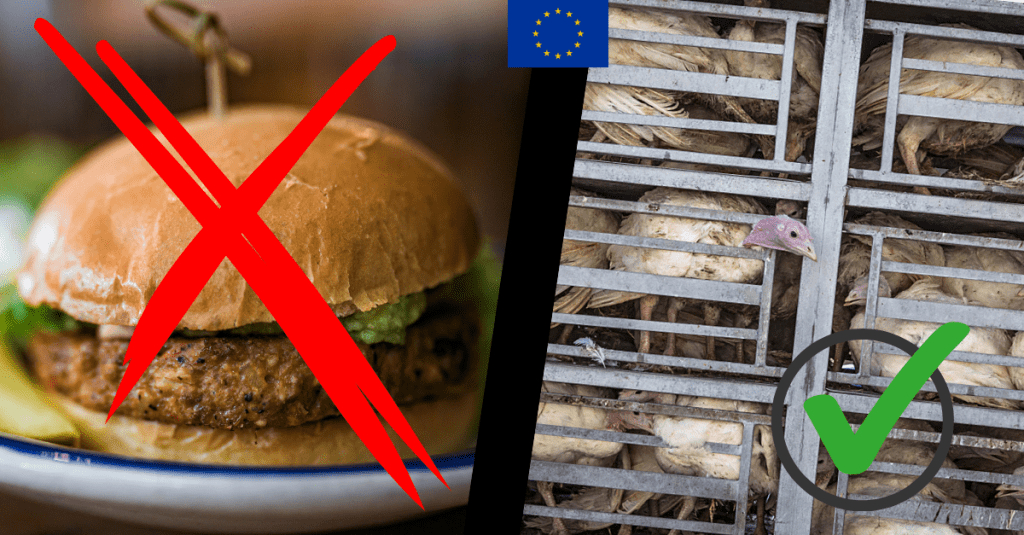
And animals even more so. An estimated 75 billion chickens are slaughtered for food every year. The corresponding number of fishes is ‘almost impossible to calculate’, according to the World Economic Forum. How can so much suffering go unnoticed by so many people?
Conclusion: The Great Vanishing Act
Magic, someone said. Yes, magic is the only explanation.
Animal cruelty is a vanishing act. When the magician waves their wand, an audience holds its collective breath. Some spectators try to solve the mystery; others swear they know it. But most are held in disbelief. Between the assistant entering the box and the box being opened – empty! – is magic. Living, breathing, feeling beings enter the building; lifeless cuts of meat leave it, conveniently packaged into boxes. Slaughter is a decidedly offstage spectacle, a show defined by its absence, by its invisibility. Morality dies between the forcibly impregnated mother, the over-crowded shelter, the diseased bodies, the truck driving to the slaughterhouse, the stun gun, the slit throat… but enough already: I can see the star of tonight’s show is waiting in the wings.
He’s anxious to get onstage and share his talents with you all. As I leave, let me recap: morality, biology, prejudice, rationality, consciousness, sentience, individuality, personality, storytelling, language!, incomprehensible numbers and one magical difference: the ingenuity of human deception. Never has a species so successfully convinced itself that suffering doesn’t exist by closing its eyes and locking it behind closed doors. Give it up, my friends, for The Marvellous Matadero…
Many thanks to the Cambridge Centre for Animal Rights Law for publishing ‘The Marvellous Matadero’ in May 2023. Find out more and support their work here:
 veganpoetry.com
Leave a comment